

We Are The World – Discovering Different Perspectives on Environmental Challenges
The next day of our project brought together culture, environmental learning, creativity, and meaningful dialogue. As participants became more comfortable with one another, the atmosphere grew even more energetic, creating the perfect environment for deeper discussions and stronger intercultural connections.
The morning started with a traditional Hungarian breakfast prepared by the Hungarian team. Participants enjoyed a variety of local specialties while learning more about Hungarian food traditions and cultural customs. Sharing meals from different countries has become one of the most enjoyable ways for participants to experience cultural diversity throughout the project.
To add an element of surprise and kindness to the week, participants drew names for the Secret Friend activity. Throughout the project, everyone will anonymously support and encourage another participant through small acts of kindness, helping to strengthen friendships and create a positive group atmosphere.
The day officially began with an energizing activity that filled the room with laughter and movement. Participants worked together through a series of challenges that encouraged teamwork, communication, and quick thinking, helping everyone start the day with enthusiasm and positive energy.
One of the key learning activities of the day was Urban Meets Rural, where participants explored how environmental issues can differ depending on where people live. Through discussions and debates, young people from urban and rural backgrounds shared their experiences and perspectives. Participants discovered that while communities may face different environmental challenges, many of their concerns are connected. Together, they developed ideas for practical solutions that could be adapted to different local realities.
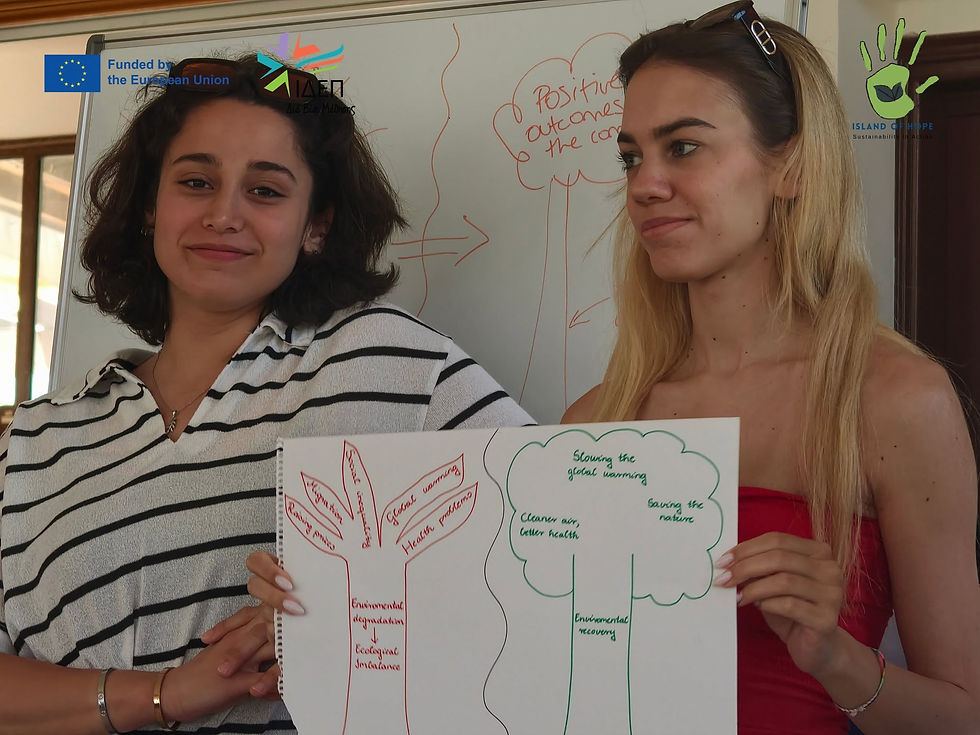
Later in the morning, participants took part in an interactive conference focused on environmental challenges affecting Cyprus and Europe. Rather than listening passively, participants became active contributors by expressing environmental concerns through creative methods such as short performances, poems, drawings, and visual presentations. Topics including water scarcity, pollution, climate change, waste management, and biodiversity loss were explored from different perspectives. The activity demonstrated that environmental education can be both informative and creative.
After lunch, participants engaged in a lively cultural trivia activity that tested their knowledge about different countries, traditions, and customs. The activity created many fun moments while helping participants appreciate the diversity represented within the group.
Environmental learning continued through the Environment Timeline activity. Working in international teams, participants researched significant environmental events and developments between 1920 and 2024. By examining historical milestones, environmental movements, international agreements, and major ecological events, participants gained a broader understanding of how environmental awareness has evolved over time. Presenting their findings to the group allowed everyone to connect past actions with present-day environmental challenges.
One of the most inspiring moments of the day was the Human Library activity. Instead of borrowing books, participants "borrowed" real-life experiences from individuals who shared personal stories related to environmental activism, sustainability, and community action. These conversations provided valuable insights into how ordinary people can contribute to positive environmental change. The activity encouraged participants to reflect on their own experiences and consider how they can become more active in their local communities.
As the day came to an end, participants gathered for reflection and evaluation sessions. They shared what they had learned, discussed the most memorable moments of the day, and provided feedback about the activities. The dissemination teams also worked on capturing photos, videos, and stories to share the project's journey with a wider audience.
This day offered participants a deeper understanding of environmental issues while strengthening intercultural friendships and encouraging active participation. Through dialogue, creativity, and shared experiences, participants continued building the knowledge and motivation needed to become environmental ambassadors in their own communities.
The views, opinions, activities, and materials expressed within this project and publication are the sole responsibility of the beneficiary organization and its project partners and do not necessarily reflect the official position of the European Commission. The European Commission cannot be held responsible for any use that may be made of the information contained therein.
#WeAreTheWorld #ErasmusPlus #YouthExchange #EnvironmentalAwareness #UrbanMeetsRural #ClimateAction #Sustainability #EnvironmentalEducation #YouthForEnvironment #EcoYouth #GreenFuture #InterculturalLearning


Comments