

One World, Many Voices – Day 3: Learning to Listen, Understand, and Connect
The third day of our project took participants on a powerful journey through some of the most important skills for building inclusive and respectful communities: communication, empathy, active listening, and conflict resolution.
As the project continues to bring together young people from different countries, cultures, and backgrounds, Day 3 encouraged participants to look beyond differences and focus on understanding the emotions, needs, and perspectives that connect us all as human beings.
The morning began with a special cultural experience as participants enjoyed a traditional Hungarian breakfast prepared by the Hungarian team. Sharing food is often one of the simplest ways to learn about another culture, and the breakfast offered everyone an opportunity to discover new flavors while learning more about Hungarian traditions. It was a warm and welcoming start to a day that would focus heavily on human connection and understanding.
Following the morning energizer, participants entered the first learning session of the day: the Conflict Mapping Workshop. Through realistic scenarios inspired by situations that frequently occur in international groups, participants explored challenges such as language barriers, misunderstandings between roommates, feelings of exclusion, and different personal expectations.
Rather than focusing on assigning blame or identifying who was right or wrong, the workshop encouraged participants to examine what often lies beneath conflicts: emotions, unmet needs, assumptions, and communication gaps. Many participants realized that disagreements are often not caused by bad intentions but by misunderstandings that grow when people do not feel heard or understood.
The learning journey continued with the Active Listening Workshop, which challenged participants to slow down and truly listen. Through paired conversations and personal storytelling exercises, participants practiced listening without interrupting, judging, or preparing their own responses. Instead, they focused entirely on understanding the person speaking.
For many, this simple exercise proved surprisingly powerful. Participants reflected on how rare it can be in everyday life to feel genuinely listened to and how meaningful it is when someone gives their full attention. The activity highlighted active listening as one of the most valuable tools for building trust, strengthening relationships, and preventing unnecessary conflict.
During the afternoon, participants explored the dynamics of conflict escalation through the Conflict Ladder Exercise. Working through simulations, they observed how small misunderstandings can gradually develop into larger disagreements when communication breaks down. Step by step, participants acted out situations that moved from confusion and misinterpretation to frustration, defensiveness, and eventually complete communication failure.
However, the most important lesson came when participants revisited the same scenarios using practical conflict-management techniques. By applying empathy, active listening, respectful language, clarifying questions, and reframing techniques, they transformed tense situations into constructive conversations.
Watching the outcomes change so dramatically demonstrated a powerful message: conflicts are not always about the problem itself, but often about how people choose to communicate during difficult moments.
One participant perfectly summarized the essence of the day during the reflection session:
"Sometimes people don’t need solutions first. They just need to feel understood."
This simple but profound observation resonated strongly throughout the group and became one of the key messages participants carried away from the day.
The learning continued through Mediation Skills Practice, where participants stepped into the role of mediators and explored how they could help others navigate disagreements. Through role plays and practical exercises, they learned how neutral facilitation, empathy, and dialogue can create opportunities for understanding rather than confrontation. Participants discovered that mediation is not about choosing sides but about creating space for constructive communication and mutual respect.
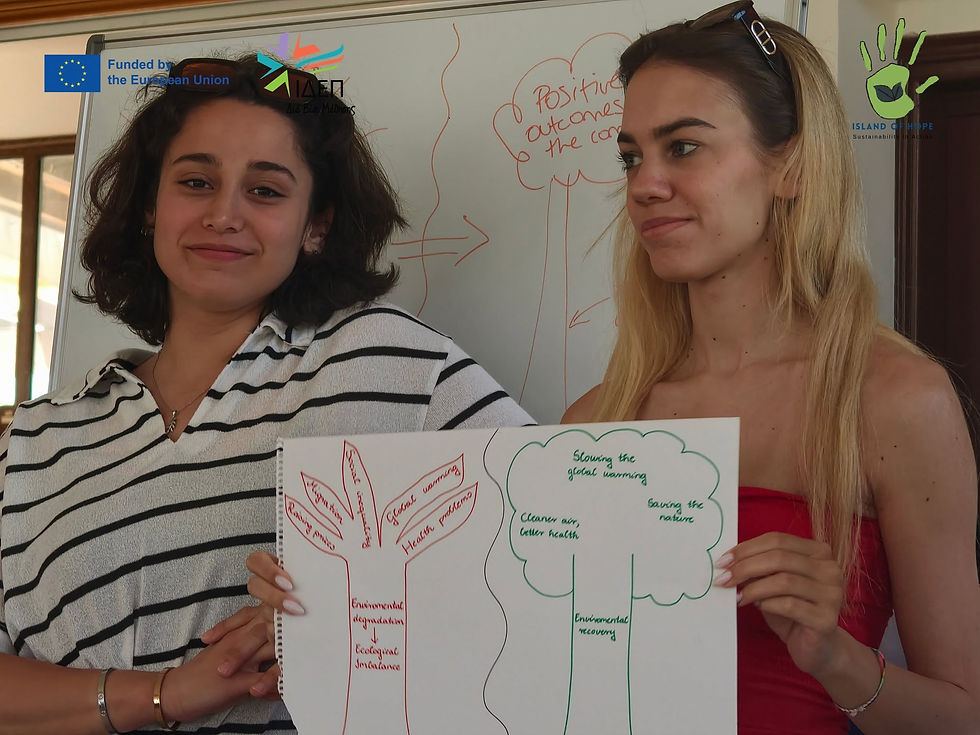
As every evening, the group gathered around the growing Reflection Tree, which continues to capture the collective learning journey of the project. Participants shared emotions, challenges, personal discoveries, and memorable moments from the day. Many reflected on how the activities had helped them better understand not only others but also their own communication habits and reactions during conflict situations.
The day concluded with a vibrant Hungarian Cultural Evening, offering participants another opportunity to experience the richness of cultural diversity. The Hungarian team introduced their traditions through music, dances, cultural presentations, stories, language activities, and traditional snacks. The evening quickly transformed into a celebration of curiosity, learning, and intercultural friendship as participants joined dances, exchanged stories, and explored new aspects of Hungarian culture.
The main learning outcome of Day 3 was the realization that effective communication begins with understanding rather than speaking. Participants learned that empathy, active listening, and respectful dialogue can prevent many conflicts before they arise and can transform challenging situations into opportunities for connection and growth.
As friendships continue to deepen and conversations become more meaningful, One World, Many Voices is proving that intercultural learning is not only about discovering other cultures, it is also about learning how to communicate, cooperate, and build understanding across differences.
The views, opinions, activities, and materials expressed within this project and publication are the sole responsibility of the beneficiary organization and its project partners and do not necessarily reflect the official position of the European Commission. The European Commission cannot be held responsible for any use that may be made of the information contained therein.
#ErasmusPlus #OneWorldManyVoices #YouthExchange #Cyprus #ConflictResolution #ActiveListening #InterculturalDialogue #YouthEmpowerment #NonFormalEducation #LearningTogether #Inclusion


Comments