

Youth Workers Select Volunteer Activists of the Future
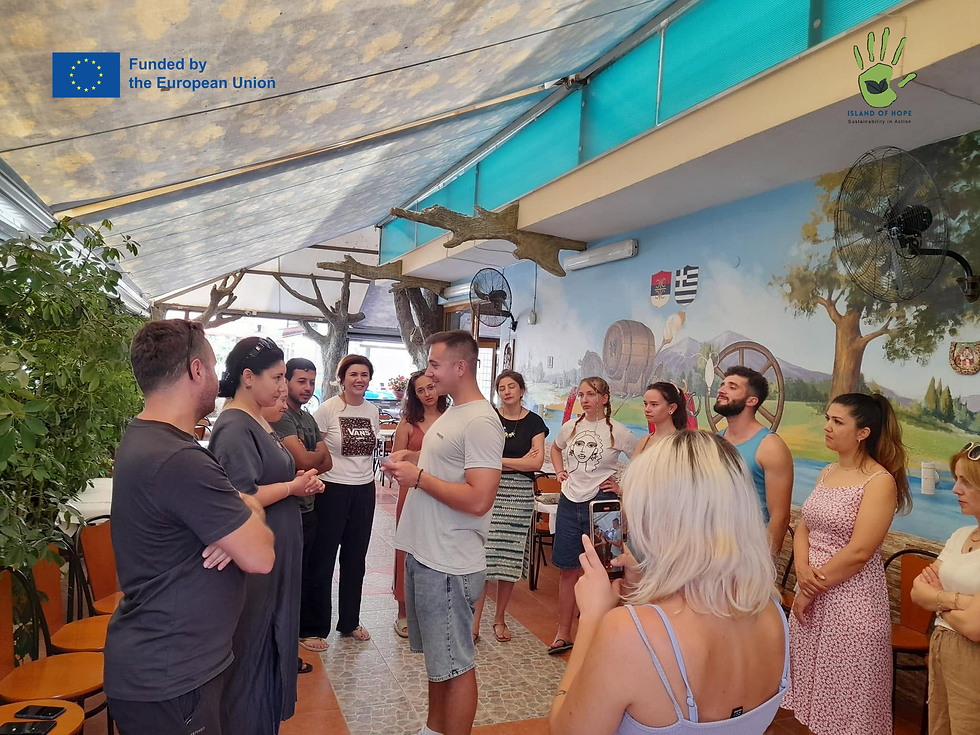
From May 30 to June 7, 2024, the Erasmus+ Mobility of Youth Workers training course, titled "Youth Workers Select Volunteer Activists of the Future," was implemented in Paralia Katerinis, Greece. The project brought together 35 youth work professionals, trainers, and facilitators from eight countries. The principal objective was to equip youth workers with non-formal methodologies to communicate effectively with young people from diverse cultural and linguistic backgrounds, addressing communication barriers within international youth initiatives.
The participating organizations formed a cross-sectoral network:
Neomenioi (Greece): A youth group with specialized experience in humanitarian volunteering, rehabilitation centers, and anti-discrimination workshops.
Fiatalok Előre Egyesület (Hungary): A non-governmental organization specializing in capacity building, professional skill development, and addressing youth unemployment.
Sakarya Gençlik Merkezi (Türkiye): A public service provider managing local youth center clubs, values-based academies, and non-formal language speaking modules.
Fondatsiya "Tsennosti, dobrodeteli, integritet" (Bulgaria): A foundation focused on youth empowerment, peer-to-peer health education, and participatory arts.
Youth Ambassadors of Milan (Italy): A youth group specializing in personal development, coaching support, and community socialization strategies.
YOUTH ON BOARD (The Republic of North Macedonia): An association with expertise in local youth policy development, civic engagement, and structured leadership training.
Asociatia UIET (Romania): A non-governmental organization leveraging digital resources, debate modules, and creative arts for minority youth empowerment.
In alignment with the Erasmus+ Quality Standards, each national team integrated members from underrepresented backgrounds facing social, economic, or geographical barriers. This balanced distribution ensured that the educational models developed were evaluated against practical, diverse field realities.
Methodological Framework: Process and Practical Applications
The training course was executed through an interconnected sequence of non-formal education (NFE) modules. Each practical segment was structurally linked to the enhancement of institutional capacity and youth worker performance.
1. Group Dynamics and Operational Team Building
The initial phase focused on established team-building mechanics, role assignment, and peer interaction. Through physical coordination challenges carried out under time constraints, youth workers evaluated leadership structures and group friction resolution. These exercises demonstrated that mutual trust and operational cohesion can be established rapidly within a group before full verbal fluency is achieved.
2. Active Listening and Empathy Mechanics
To enhance communication with youth across linguistic boundaries, participants underwent structured active-listening simulations. The process required one individual to articulate a complex personal experience while the peer observed, analyzed, and summarized the emotional data without introducing judgment or unsolicited advice. This was supplemented by interactive dialogue mapping out systemic socio-economic privileges and accessibility barriers. Youth workers developed the specific capacity to assess youth needs accurately by focusing on non-verbal cues and structural context rather than direct language.
3. Digital Competence and Media Literacy
Youth workers analyzed the impact of modern communication tools on the target demographic. Utilizing a World Café layout, the cohort mapped the consequences of social media on youth education, screen addiction, cyberbullying, and the dissemination of misinformation. Participants then used digital design applications to synthesize these findings into visible informational graphics and resource maps, fulfilling the objective of integrating ICT tools directly into regular youth work practices.
4. Pedagogical Tool Exchange (The Material Fair)
A core segment of the course was dedicated to the exchange of culture-rich pedagogical tools. Each country representative presented localized children's games, brain-teasers, non-formal educational symbols, and structural puzzles. Through simulation sessions, youth workers peer-tested, adapted, and troubleshooted these tools to understand how physical materials can spark civic engagement and bypass language limitations in regional youth centers.
5. Evaluation Systems and Quality Standards
The final phase of the course focused on long-term sustainability, dissemination strategies, and validation. Participants utilized digital interactive mapping software to systematically measure pre-project expectations against post-activity learning results. The final working modules were used to coordinate localized dissemination steps, assign institutional responsibilities for project follow-ups, and guide participants through the structural requirements of the Youthpass competency assessment.
Core Competencies Acquired
1. Advanced Linguistic Adaptation
Youth workers learned to leverage non-verbal mirroring, physical educational games, and digital visual aids to construct functional communication loops. This competency allows organizations to manage international student influxes and safely engage marginalized youth facing severe language barriers.
2. Blended Non-Formal Design and Sustainability
Participants acquired the technical ability to natively embed digital resources (such as real-time feedback applications and cloud platforms) into offline learning environments. In compliance with EU environmental policies, the project modeled sustainable operations. Learning documentation was executed entirely paperless through digital folders. Single-use plastic waste was prevented by utilizing on-site water filtration hardware, and green transit options were structurally prioritized to reduce the collective carbon footprint.
3. Structural Inclusive Design
Through continuous collaboration with youth workers from isolated and rural regions, the cohort developed direct insight into managing geographical and social barriers. Youth workers left the course with verified blueprints on how to structure safety guidelines, accommodate special dietary or accessibility needs, and maintain high standards of psychological safety in local projects.
Systematic Follow-up and Impact
The professional practices refined during this course are currently being integrated into standard local operations across the partner networks in Paphos, Kozani, Budapest, Sakarya, Sofia, Milan, Shtip, and Odorheiu Secuiesc. By converting field data into structured pedagogical methods, the project ensures that youth organizations continue to elevate their service delivery in alignment with European quality standards.
The views, opinions, activities, and materials expressed within this project and publication are the sole responsibility of the beneficiary organization and its project partners and do not necessarily reflect the official position of the European Commission. The European Commission cannot be held responsible for any use that may be made of the information contained therein.




Comments